Explore the differences between a business line of credit vs loan to determine the best financing option for your business needs. Discover the pros, cons, and key factors to consider.
Navigating business financing options can be daunting. Two popular choices are a business line of credit and a business loan.
Each option has unique features and benefits. Understanding these can help you make informed decisions.
A business line of credit offers flexibility. It allows access to funds as needed, similar to a credit card.
In contrast, a business loan provides a lump sum upfront. This is ideal for large, one-time investments.
Choosing between a business line of credit vs loan depends on your specific needs.
This guide will explore the pros and cons of each option. It aims to help you choose the best financing solution for your business.
Understanding business financing options is essential for entrepreneurs. Different options suit different business needs and scenarios.
Choosing the right option can support growth and stability. Common options include lines of credit and loans, each with distinct features.
A well-rounded understanding involves evaluating factors such as interest rates, flexibility, and repayment terms. Here are some key considerations:
Each option has unique benefits. For instance, lines of credit offer flexibility for short-term needs. In contrast, loans provide security with structured payments.
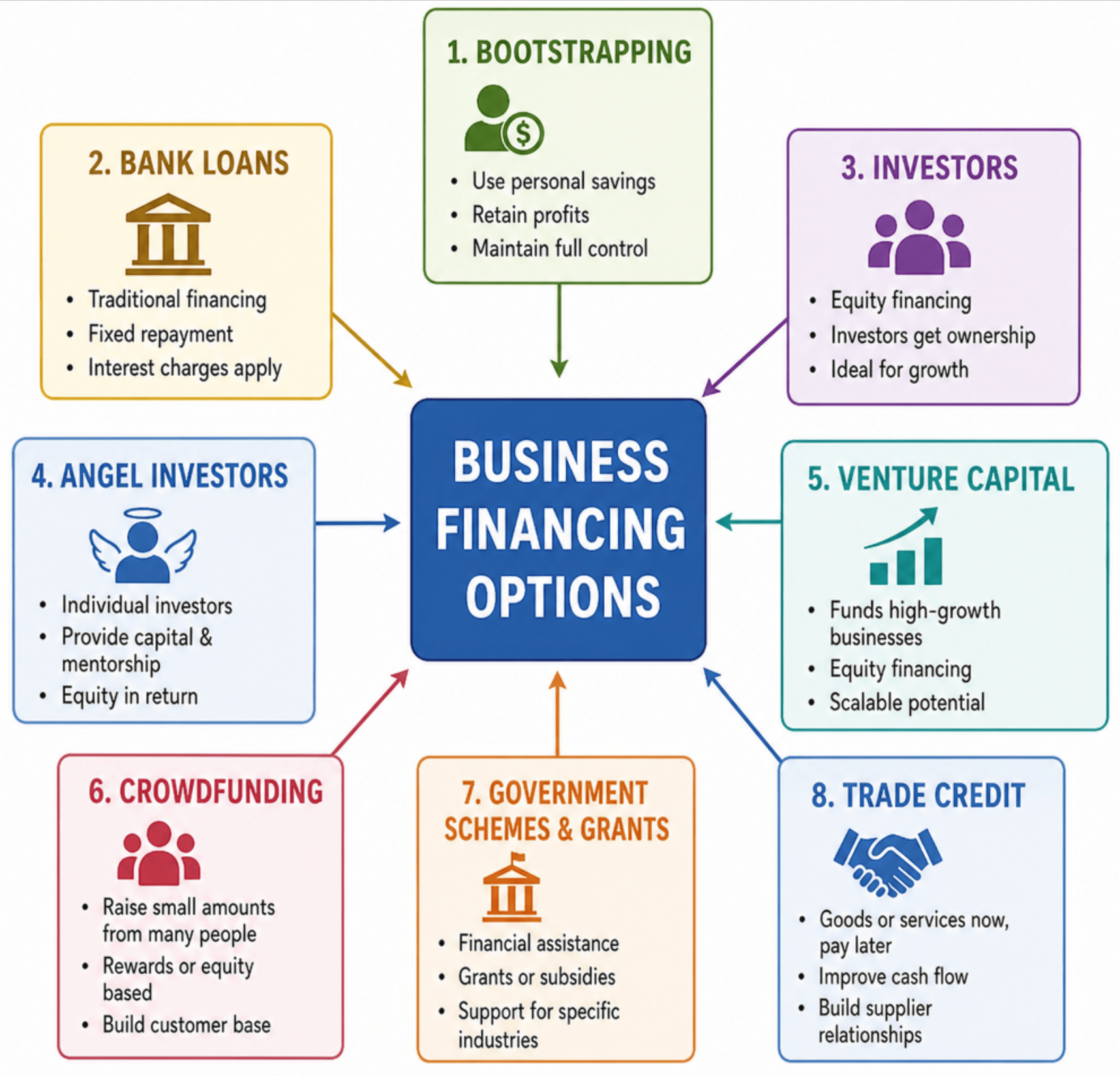
Understanding these factors enables better decision-making. The right choice can enhance business operations and financial health. Explore various financing options to find the best fit for your business goals.
A business line of credit provides flexible access to funds up to a preset limit. This operates like a credit card for businesses.
Unlike loans, you only pay interest on the amount you use, not the total credit limit. This feature benefits businesses with varying cash flow needs.
The revolving credit nature allows repeated borrowing and repayment. As you repay, funds become available again for use.
Key features of a business line of credit include:
Lines of credit are ideal for managing unforeseen expenses or seasonal fluctuations. They offer freedom for short-term financial goals, making them a versatile financing option.
A business loan provides a lump sum of money upfront. This type of financing is ideal for significant expenses or investments.
Loans often have fixed terms and interest rates. This structure allows for predictable monthly payments, aiding in financial planning.
Repayment involves regular payments until the total loan amount and interest are settled. Unlike a line of credit, the entire amount is typically drawn at once.
Key characteristics of a business loan include:
Business loans are suitable for projects like equipment purchases or expansion. They provide financial stability and support long-term business goals efficiently.
Understanding the nuances between a business line of credit and a loan helps in making informed financial choices. While both serve to finance business needs, they cater to different situations.
A business line of credit offers flexibility, allowing you to access funds as needed. In contrast, a loan provides a fixed amount upfront for a specific purpose.
One major difference is how interest is paid. With a line of credit, you only pay interest on what you use. Loans, however, accrue interest on the total amount from the start.
Repayment structures also vary. Lines of credit have variable repayment terms, while loans typically require fixed monthly payments.
Key differences include:
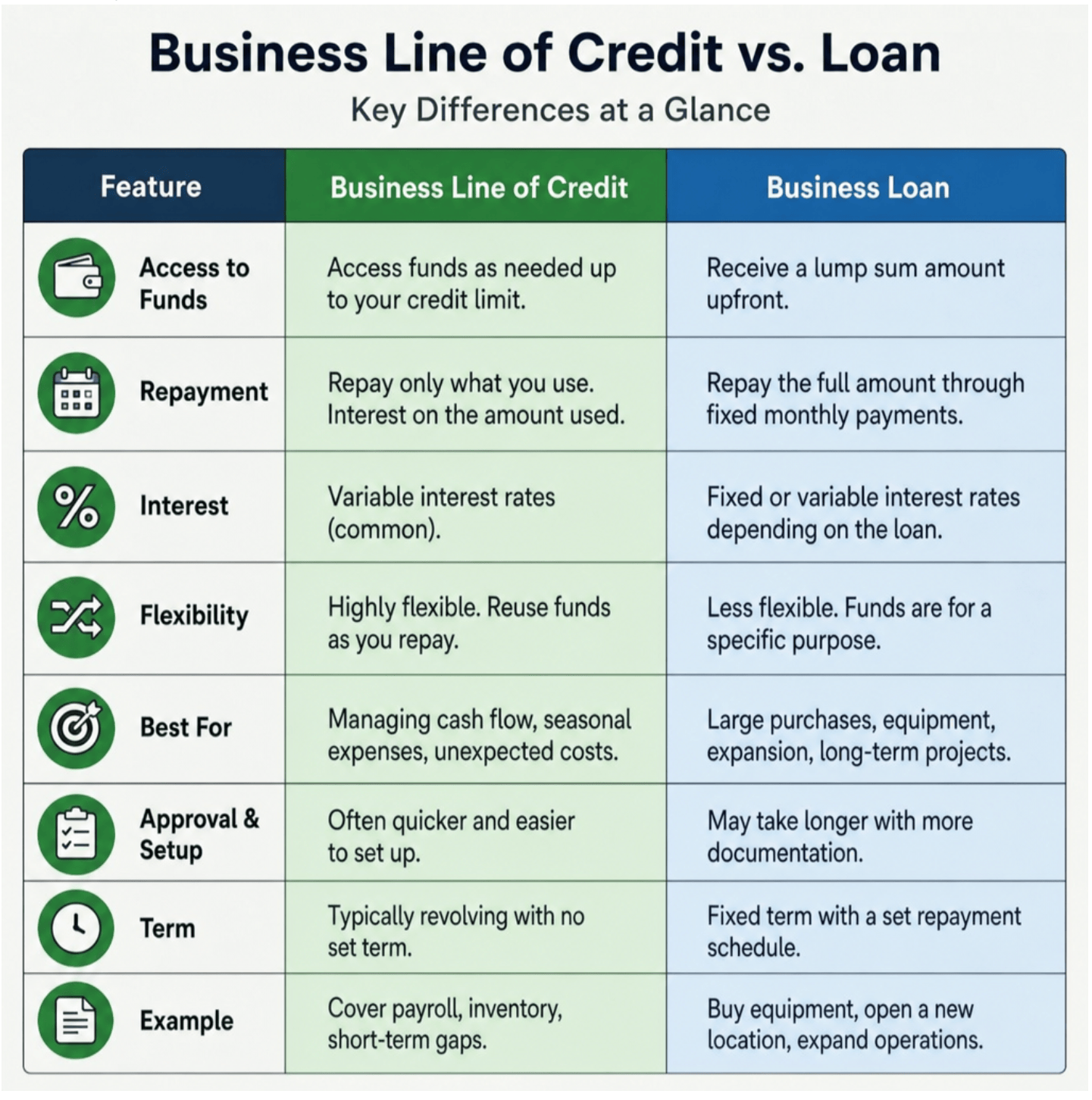
Choosing between these financing options depends on your business's specific needs and financial strategies. Each offers unique benefits tailored to different scenarios.
A business line of credit offers unique advantages for businesses with varying cash flow needs. The flexibility it provides can be a significant asset.
Lines of credit can be particularly useful for managing unexpected expenses or taking advantage of short-term opportunities.
While the benefits of a business line of credit are clear, they require disciplined financial management. Weigh these pros and cons against your business's specific needs before making a decision. Make sure it aligns with both immediate cash flow demands and long-term financial goals.
Business loans provide a structured financial solution with distinct benefits. They are generally well-suited for larger, one-time investments.
Business loans are often ideal for financing significant projects like expansion or equipment purchases, offering a sense of financial stability.
Choosing a business loan involves considering the need for financial certainty versus the lack of flexibility. Evaluate your business's ability to adhere to regular payments against the stability and predictability offered by these loans. This will help in making an informed financing decision that aligns with both current and future financial goals.
A business line of credit shines in specific scenarios. It offers an ideal solution for managing varying financial needs with flexibility.
Consider a line of credit if your business experiences cash flow fluctuations. This option is particularly beneficial for seasonal ventures with revenue peaks and dips.
These scenarios highlight the flexibility and revolving nature of a line of credit, making it a strategic choice for businesses requiring adaptive financial solutions.
A business loan is suitable for specific situations. It offers a structured approach for substantial financial commitments.
Opt for a business loan if you have a significant one-time investment, like buying equipment or expanding your premises. A loan provides the certainty of fixed payments over a set period.
These uses align with the benefits of predictable payments and long-term planning. Business loans are particularly helpful for financing capital expenditures or significant projects.
Understanding the nuances between a business line of credit and a term loan is crucial for financial decision-making. While both options offer distinct advantages, they cater to different business needs.
A line of credit is more flexible, offering revolving access to funds. A term loan, however, provides a fixed sum repaid over time with predictable installments, making it ideal for substantial investments.
Each option supports varied financial strategies, requiring careful evaluation of business goals before making a selection.
Choosing between a business line of credit and a loan depends on specific financial needs and goals. Assess the purpose of the funds, whether it is for short-term management or a large investment.
Consider the repayment flexibility required. A line of credit offers more freedom, while a loan provides fixed payments that can aid budgeting.
By weighing these factors, businesses can select the most suitable financial solution to support their growth and stability.
When considering business financing options, many questions arise. Below, we address some common inquiries about lines of credit and loans.
1. Is a line of credit better for short-term needs?
Yes, it is often more suitable for short-term cash flow management or unexpected expenses.
2. Can I use a business loan for large projects?
Absolutely. Business loans are ideal for significant investments like equipment or expansion.
3. Do lines of credit have fixed interest rates?
No, they typically have variable rates, unlike most business loans.
Deciding between a business line of credit and a loan hinges on your specific needs. Both options offer unique benefits that cater to different financial situations.
Consider the immediacy of your funding needs and your cash flow stability. A line of credit provides flexibility, while a loan offers structured repayment and predictability.
Evaluate your long-term business goals alongside current financial health. By understanding these elements, you can select the financing that aligns best with your business strategy and growth objectives.
.png)
.png)
.png)
.png)
.png)
.png)


